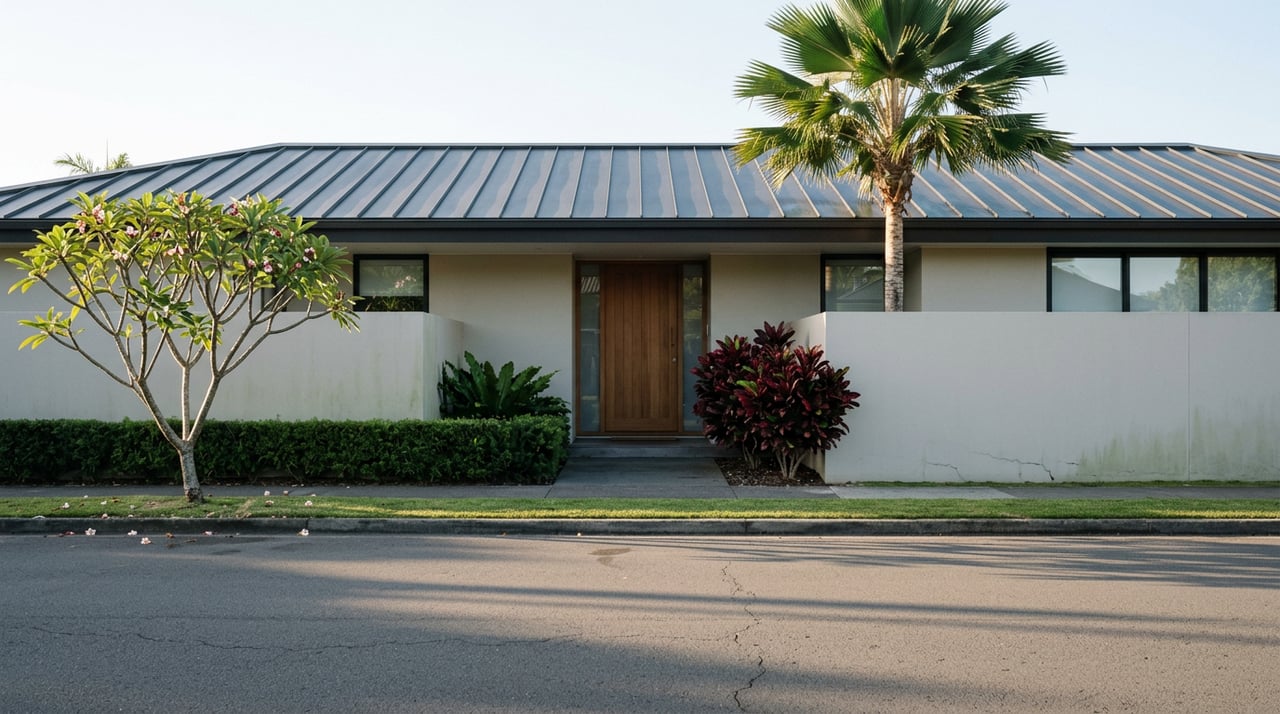
On the morning of July 1, a Wednesday, the road that circles Lanikai looked different than it had all winter. No line of parked cars nosed up against the curb by the beach access lanes. No idling SUV blocking the shoulder near the corner of Mokulua and Aʻalapapa. Just the road, open enough that a neighbor walking two dogs and a kid on a bike could use the whole width of the lane without either of them flinching toward the grass.
That quiet did not happen because tourism slowed down. It happened because the City and County of Honolulu finally moved a policy from proposal to enforcement, and the reason behind it has less to do with crowded sand than most people assume.
The story usually told about Lanikai's parking problem is a beach story: too many visitors, not enough shoreline, a residential neighborhood absorbing the load of a de facto public park it never asked to host. That version is not wrong. But the detail that actually forced the city's hand was not about beach towels. It was about what happens when a fire truck or an ambulance needs to get down a narrow two-lane loop that already has cars parked on both sides.
What The Finalized Plan Actually Restricts
The Lanikai Transportation Management Plan spent about a year moving through neighborhood board meetings before the city locked it in. As of this summer, here is what it actually does, street by street:
| Location | Rule now in effect |
|---|---|
| Mokulua Drive | No parking, all day, every day. Officers ticket and tow. |
| Aʻalapapa Drive | Same permanent ban, phased in shortly behind Mokulua Drive. |
| Cross streets | Converted to one-way. Parking allowed on one side, prohibited from 10 a.m. to 4 p.m. |
| Holidays | No parking anywhere in the neighborhood, extending a temporary barrier program the city already ran on three-day weekends. |
Before this took full effect, city officials estimated that about 170 cars were parked illegally along the loop every single day. Spread across a loop that runs roughly three miles around, that works out to a car every 90 feet or so, day in and day out, on residential streets that were never built with a shoulder wide enough to hold them.
Kelly Akasaki, who chairs the Traffic Engineering Division at the Honolulu Department of Transportation Services, put the underlying legal issue plainly to KHON2: cars parking in the grass or dirt along the road were sitting on space the traffic code reserves for pedestrians, whether or not the sidewalk is formally improved. That is a narrower argument than "too many tourists." It is a code compliance problem that happened to be caused by tourism volume, and it is why the fix looks like traffic engineering rather than a beach access rule.
The Argument That Actually Won
Ask why the city finally acted after years of complaints, and the honest answer is not really about the beach at all. It is about the loop being the neighborhood's only through route.
Jade Lau, who chairs the Kailua Neighborhood Board's transportation committee, described a near miss she experienced firsthand while waiting in loop traffic. The car behind her got frustrated enough to try passing, and in doing so nearly hit a child on a bike and the parent walking beside them in the bike lane. That is the story that shows up in testimony, not sunset photography.
Local guides covering the loop have described a version of the same problem in blunter terms: congestion had grown severe enough that it could take residents hours to leave their own driveways, and emergency vehicles struggled to move through the neighborhood at all. Whether or not every ambulance call was slowed, the fact that residents were telling that story to the neighborhood board is itself the point. A parking dispute framed around beach crowding rarely produces a permanent, all-day, every-day ban. A parking dispute framed around whether a fire truck can get down the block usually does.
Not Everyone Agreed, And The City Moved Anyway
The plan was contested right up until it was finalized. At a packed Kailua Neighborhood Board meeting in February, one resident, John Medlock, asked why any residential neighborhood should function as "a playground for the world." Others pushed back hard in the other direction. One man told the board it was clear the community opposed the ban outright, and accused a smaller group of residents of angling to turn Lanikai into what amounts to a private neighborhood.
Kevin Twomey, another Kailua resident, offered the more measured middle position: a better parking solution would be welcome, but in the meantime, people should still be allowed to park until one exists. Meanwhile John Foti, who paddles with the Lanikai Canoe Club, spoke in favor of the temporary holiday barriers the city had already been testing, saying the approach worked for the club, the community, and visitors as best it could.
None of that division changed the outcome. The city had already treated the ban as settled by the time testimony wrapped, with the remaining questions limited to sequencing and construction timing rather than whether it would happen.
What Changes On An Ordinary Tuesday
For anyone who actually lives on the loop, the policy questions matter less than the logistics questions. A few things worth knowing:
- Hosting family or out-of-town friends: The three-minute loading zones on Mokulua and Aʻalapapa exist for drop-offs, not for a rental car idling with its hazards on while a week's worth of beach gear gets unloaded. Plan for guests to park at Kailua Beach Park and walk or bike the last stretch in.
- Contractors and deliveries: The one-way conversion on cross streets changes how trucks approach a given address, and the 10 a.m. to 4 p.m. restriction means anything requiring a longer stay needs to happen either early morning or after 4.
- Getting around without a car: TheBus Route 671 runs between Kailua town and the Lanikai loop, and renting a bike in Kailua town turns the loop into an easy ride rather than a parking negotiation.
- If you still need to park to unload something heavy: Kailua Beach Park's boat ramp lot remains free, has restrooms and showers, and is about a 10 to 15 minute walk to the Lanikai beach access lanes along a sidewalk.
None of this is about accommodating visitors more comfortably. It is about residents no longer needing to negotiate around a stranger's rental car to get a contractor's truck to the driveway.
The Other New Rule This Year
If paddling out to the Mokes is part of your regular rhythm, one more 2026 change is worth knowing even though it has nothing to do with the parking plan. The Department of Land and Natural Resources now requires a landing permit for anyone stepping onto Moku Nui, priced at three dollars per person per day, with landing prohibited entirely on Sundays and fines running as high as $1,500 for landing without one. Most kayak rental shops in Kailua build the permit into the rental price, but anyone launching their own kayak or paddleboard from the beach needs to secure it separately before heading out.
It is a small addition, but it fits the same pattern as the parking rules. A place that used to run on informal understanding is shifting toward documented permission, whether that is a permit to land on an island or a sign that specifies exactly where a car can sit for three minutes.
Where To Track What Comes Next
The Kailua Neighborhood Board continues to hear testimony on how the cross-street conversion and one-way changes are performing, and the Lanikai Association keeps residents updated on traffic management developments and community alerts as construction and enforcement continue to settle in. Both are worth following if you want to know about the next round of adjustments before they show up as a new sign on your street.
The quiet on Mokulua Drive this summer is not really a story about tourism finally being managed. It is a story about a neighborhood deciding that legal clarity, even an inconvenient kind, was worth more than the informal arrangement that came before it.
If you live on the loop and you are curious what a quieter street has done for how your home shows, or you are simply weighing what is next for your Lanikai property, Hokua Hawaii Realty knows this neighborhood block by block. Reach out anytime to request a free home valuation and talk through what these changes mean for you.