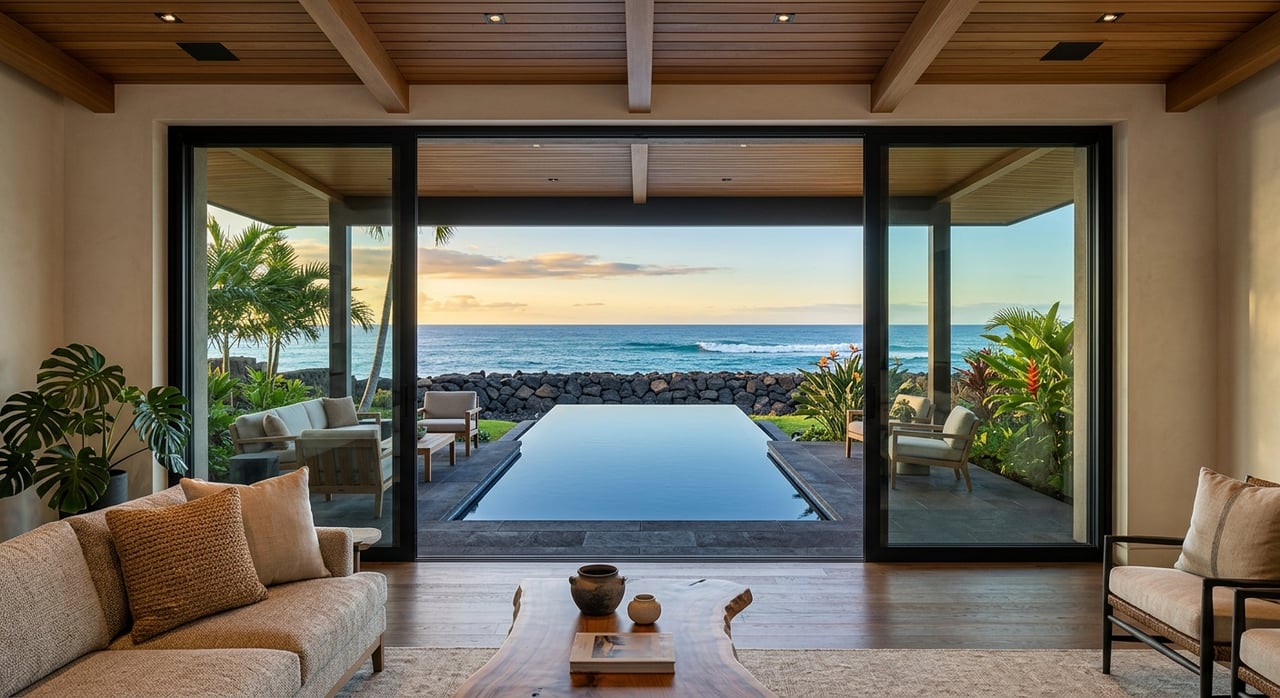
If you are looking at Portlock oceanfront homes, you are not just buying a view. You are evaluating shoreline conditions, buildable area, access, and long-term risk on one of East Honolulu’s most limited waterfront streets. That can feel like a lot to sort through, especially when each lot may have very different coastal and permitting realities. This guide will help you understand what makes Portlock oceanfront property unique, what can affect value, and what due diligence matters most before you buy or sell. Let’s dive in.
Portlock oceanfront basics
Portlock sits at the east end of Maunalua Bay in Hawaii Kai. According to the Historic Hawaiʻi Foundation’s overview of the Kaiser estate, it developed as an early upper-class neighborhood and grew in popularity from the 1950s onward.
That same historical context matters today because the Maunalua shoreline was heavily reshaped during Kaiser-era development beginning in 1959. In practical terms, that helps explain why shoreline conditions, lot layouts, and oceanfront usability can vary so much from one Portlock address to the next.
Portlock is also a small market. A current neighborhood profile from Hawaii Living’s Portlock page estimates there are about 120 properties in the neighborhood, with only around 40 directly on the ocean, and lot sizes that range from roughly 11,000 square feet to more than one acre.
Why inventory feels so limited
Oceanfront inventory in Portlock is thin, and that scarcity shapes both pricing and competition. The same Portlock market profile showed 16 active listings at the time captured, which should be treated as directional rather than official, but it still reflects a tight market.
Recent sales data points to a low-volume, high-price segment. That source reported a trailing 12-month median sales price of $2.775 million, 16 sales, a 30-day median market time, and a 92.76% list-to-sale ratio, while the Honolulu Board of REALTORS® MLS snapshot referenced there showed only one Portlock sale in July 2025 with a median sold price of $2.6 million.
For you as a buyer or seller, this means each property can trade on highly specific features rather than broad neighborhood averages alone. Ocean frontage, shoreline condition, lot scale, access, and renovation potential can all move value significantly.
Oceanfront value is lot specific
One of the biggest things to know about Portlock is that not every oceanfront lot offers the same shoreline experience. Some properties have sandy or partially sandy frontage, while others front seawalls or hardened edges where waves can break directly against the structure at high tide.
The University of Hawaiʻi coastal research for Maunalua describes Portlock Beach as eroding along much of its length, with erosion reaching up to 0.8 feet per year in some areas. The same research notes that other shoreline segments have no beach at all.
Maunalua Bay does get some natural protection from a shallow fringing reef and Kawaihoa Point, but that does not remove erosion concerns. So when you compare two Portlock oceanfront homes, the coastline itself may be as important as the house.
Site size can drive premium pricing
In Portlock, land can be a major part of the value story. A historic example is the Henry J. and Alyce Kaiser Estate, which was described in nomination materials as a five-acre oceanfront estate with about 700 feet of shoreline, including a 1.881-acre main-house parcel and a 12,155-square-foot residence.
That is an exceptional property, but it illustrates an important point. In this neighborhood, estate-scale sites are part of what makes certain homes especially rare, and buyers often weigh the land, frontage, and setback position just as heavily as the improvements.
Privacy has limits on the shoreline
Portlock is known for larger homesites and a more tucked-away feel, but oceanfront ownership here does not mean total seclusion. Shoreline rules and access patterns are part of the reality.
The East Honolulu Sustainable Communities Plan says Portlock Road includes about 19 private shared driveways and that shoreline access occurs about every 200 linear feet. The same plan noted the city’s goal of at least three public shoreline access points along the road.
DLNR also states that the area seaward of the certified shoreline is part of the beach transit corridor, which affects how shoreline access is understood on oceanfront property. For buyers focused on privacy, it is smart to confirm where public access points, easements, reserve strips, and shared driveways intersect the specific lot.
Certified shoreline comes first
If you are evaluating a Portlock oceanfront home, the first technical document to understand is the certified shoreline. According to DLNR’s Office of Conservation and Coastal Lands, the certified shoreline establishes the benchmark for shoreline setbacks, helps define regulatory boundaries, and can help resolve encroachments and unauthorized shoreline structures.
This is why a street address is not enough. Two homes on the same road can have very different certified shoreline positions, which can change what is buildable, what is legal, and what future improvements may be possible.
Setback rules can reduce buildable area
Honolulu’s updated shoreline setback ordinance uses a baseline setback line of 60 feet mauka from the certified shoreline. Under the city’s revised Chapter 26 shoreline rules, erosion-rate calculations can push that setback farther inland, with a cap of 130 feet on many lots outside the Primary Urban Center area.
For Portlock owners, that can have a direct effect on additions, rebuild plans, pool placement, and even how much of the lot is practically usable for future work. On some properties, the oceanfront portion that looks most appealing may also be the most constrained.
Flood and sea level rise matter too
Setbacks are only part of the picture. Flood exposure and sea level rise screening also matter when you assess risk or renovation potential.
The same Honolulu shoreline ordinance says that if a proposed structure is in a special flood hazard area, the finished lowest floor generally must be at least three feet above FEMA base flood elevation. If the structure is outside that flood hazard area but inside the State sea level rise exposure area under the 3.2-foot scenario, the lowest floor generally must be at least three feet above the highest adjacent grade.
The State’s sea level rise guidance says the 3.2-foot SLR-XA is the planning scenario used for most development decisions. FEMA also states that its Flood Map Service Center is the official public source for flood hazard information.
For you, the takeaway is simple: do not rely on just one map. A careful review should include both FEMA flood mapping and the State’s sea level rise viewer.
Older homes need closer rebuild review
Many oceanfront buyers love the idea of buying an older Portlock home and renovating it into something more modern. That can be possible, but the rules matter.
Under Honolulu’s shoreline setback ordinance, repairs generally cannot enlarge or intensify a nonconforming structure. The same ordinance says that if a nonconforming structure is destroyed beyond 50% of its replacement cost, it generally cannot be reconstructed except in conformity with the chapter or under a shoreline setback variance.
This is a key issue for older oceanfront homes. What starts as a cosmetic remodel plan could become a much more limited entitlement process if the property has nonconforming conditions or if there is a major loss event.
SMA review can affect your timeline
Portlock buyers from the mainland are often surprised by how much coastal work can trigger extra review. Under Honolulu Chapter 25, all development within the Special Management Area is subject to review, and a major permit may be required if the work exceeds $500,000 or may cause significant adverse environmental effects.
That means projects like additions, pools, retaining walls, and other site improvements may involve more process than expected. If you are comparing properties based on renovation upside, permit path and approval timing should be part of your analysis.
Seawalls and shoreline structures need verification
If a Portlock property already has shoreline hardening, you should review it carefully. Honolulu’s shoreline rules treat seawalls, revetments, and similar measures as shoreline hardening, and the East Honolulu plan says hardening should generally be a last resort because it can contribute to beach narrowing and loss elsewhere.
For buyers and sellers alike, it is wise to verify permits, maintenance history, and legal status for any seawall, revetment, groin, retaining wall, or prior shoreline work. These records can affect value, future repair obligations, and what changes may or may not be allowed later.
A smart Portlock due diligence checklist
Because Portlock oceanfront homes are so lot-specific, a solid due diligence file matters. The right documents can help you understand legal buildable area, resilience standards, access realities, and future costs before you commit.
A Portlock review will often include:
- Certified shoreline survey
- Shoreline setback determination
- FEMA flood-zone result
- State sea level rise exposure screen
- SMA permits
- Any shoreline setback variances
- Records for seawalls, revetments, groins, retaining walls, or prior shoreline work
- Title review for easements, reserve strips, access rights, and shared driveways
This level of review is one reason experienced, local guidance matters in oceanfront transactions. If you are thinking about buying or selling in Portlock, Hokua Hawaii Realty, LLC offers personalized Oahu market guidance with the kind of detail-oriented support these properties deserve.
FAQs
What should buyers know about Portlock oceanfront homes before making an offer?
- You should review the certified shoreline, setback rules, flood zone, sea level rise exposure, access points, and any permits or records tied to shoreline structures before finalizing price or renovation plans.
Do all Portlock oceanfront homes have a sandy beach?
- No. University of Hawaiʻi coastal research shows that some segments are eroding beach, while others have no beach and waves break against seawalls at high tide.
How close can you build to the ocean in Portlock?
- Honolulu uses a 60-foot shoreline setback baseline from the certified shoreline, but erosion-rate calculations and flood or sea level rise rules can push the effective buildable area farther inland.
Are Portlock shorelines private to oceanfront owners?
- No. DLNR says the area seaward of the certified shoreline is part of the beach transit corridor, and the East Honolulu plan notes repeated shoreline access points along Portlock Road.
Can you renovate an older Portlock oceanfront home?
- Maybe, but older nonconforming structures may face limits on expansion or reconstruction, and larger coastal projects may also require SMA or shoreline setback review.
Why is Portlock pricing so property specific?
- Pricing can vary widely because shoreline condition, lot size, frontage, access, permitting history, and renovation potential differ significantly from one oceanfront property to another.